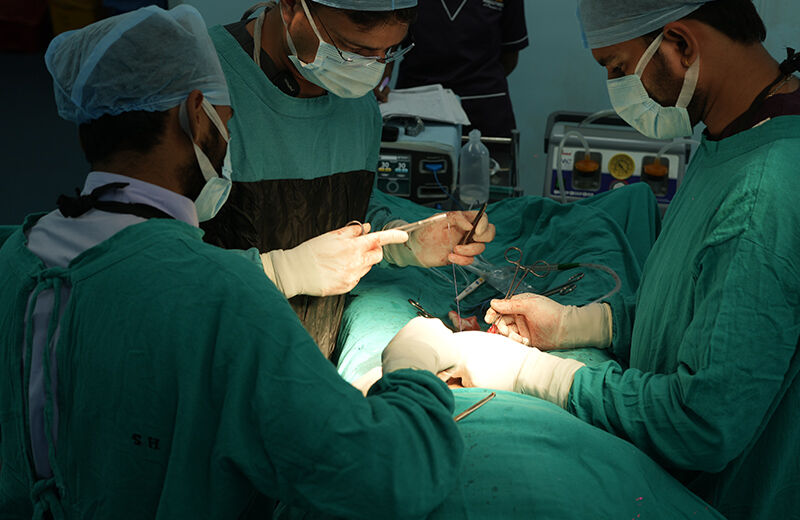

Head and Neck Cancer Symptoms: When Should You Consult a Surgical Oncologist?
A non-healing mouth ulcer, neck lump, voice change, or swallowing difficulty should not always be ignored.
What is Head & Neck Oncology?
Head and neck cancers can affect the mouth, tongue, cheek, gums, jaw, throat, voice box, thyroid, salivary glands, and lymph nodes in the neck. Many early symptoms look simple at first. A small ulcer may be mistaken for a mouth injury. A neck swelling may be ignored because it is painless.
Head & Neck Oncology is the branch of cancer care that deals with cancers of the oral cavity, tongue, cheek, jaw, throat, thyroid, salivary glands, and neck nodes. These cancers need careful evaluation because the affected area may be important for speaking, eating, swallowing, breathing, and facial appearance.
Common head and neck cancer symptoms
1. Mouth ulcer that does not heal
A mouth ulcer due to minor injury usually heals within a short time. But an ulcer that stays for weeks, increases in size, bleeds, or causes pain should be evaluated.
2. White or red patch inside the mouth
A white or red patch on the tongue, cheek, gums, or inside the mouth may look harmless. But if it does not go away, it needs medical evaluation.
3. Lump or swelling in the neck
A neck lump can occur due to infection, thyroid swelling, lymph node swelling, or other reasons. But a persistent lump, especially if painless or increasing, should be checked.
4. Difficulty swallowing
Difficulty in swallowing, pain while swallowing, or a feeling of food getting stuck can be related to throat or food pipe conditions. If it persists, proper evaluation is needed.
5. Persistent voice change
Hoarseness or voice change that continues for more than a few weeks should not be ignored.
6. Bleeding from mouth without clear reason
Bleeding from gums, tongue, cheek, throat, or a mouth lesion needs attention, especially when repeated or associated with an ulcer or lump.
7. Pain in mouth, jaw, throat, or ear
Persistent pain in the mouth, jaw, throat, or ear can be a warning sign, especially when associated with swelling, ulcer, difficulty chewing, or difficulty swallowing.
8. Denture fitting changes or jaw swelling
If dentures suddenly stop fitting properly, or there is jaw swelling, cheek swelling, or difficulty opening the mouth, evaluation is needed.
Who is at higher risk?
- Tobacco use
- Gutkha or khaini use
- Smoking
- Alcohol use
- Poor oral hygiene
- Long-standing mouth irritation
- Previous cancer history
- Persistent symptoms despite treatment
Why early evaluation matters
Early evaluation can help in diagnosis and treatment planning. A biopsy or FNAC may be required to confirm diagnosis. CT scan, MRI, PET-CT, ultrasound, or other imaging may be needed to understand disease extent.
Delay can make treatment more complex. Early consultation does not mean every symptom is cancer. It means the cause should be properly identified.
What happens during consultation?
During a head and neck oncology consultation, the doctor may review symptoms, examine the mouth, throat, neck, and related areas, check previous reports, and advise further investigations if needed.
If cancer is confirmed, treatment planning may include surgery, radiation therapy, chemotherapy, or a combined approach depending on the cancer site and stage.
Reports to bring for consultation
- Biopsy or FNAC report
- CT scan, MRI, PET-CT, or ultrasound reports
- Previous prescriptions
- Dental or ENT consultation records
- Blood reports
- Current medicine list
- Previous surgery, chemotherapy, or radiotherapy records
- Discharge summaries
- Old follow-up notes
Not every mouth ulcer or neck swelling is cancer. But any symptom that persists, worsens, bleeds, or returns repeatedly deserves medical attention.
Need Head & Neck Cancer Evaluation?
Book a consultation with Dr. Rohit Kumar Jha for head and neck cancer evaluation, report review, second opinion, and cancer surgery planning in Ranchi.
Book Appointment